Optimization of Water Resource Utilization
Water is a limiting factor for the development of arid regions. This constraint is exacerbated by the non-renewable nature of this resource in Arid Zones. Its mobilization faces an ever-increasing socio-economic pressure. Its exploitation is directly conditioned by its qualitative aspect in relation to edaphic constraints. For example, we can mainly cite:
- Rising groundwater levels in the Oued Souf region causing urban and agricultural sanitation problems as well as waterborne disease risks.
- Secondary salinization of soils in the Oued Righ area and in the southern Ziban region, which could compromise the date palm economy of the largest production basins.
- Degradation of some hydraulic works due to the corrosive nature of certain waters.
- Discharge of large volumes of wastewater directly into often dry riverbeds or closed depressions without an outlet, inevitably leading to a major risk of contamination of underlying water tables in the surrounding environment.
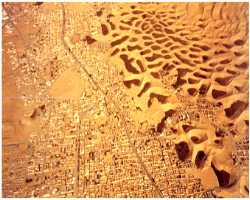
Board 01: Effect of groundwater rise in Souf in urban and agricultural areas (Aerial view).
In response to this situation, research in arid environments must contribute to addressing these issues by:
- Developing tools for quantifying and managing the resource, both from a quantitative and qualitative perspective.
- Developing appropriate exploitation, management, and forecasting systems related to the salinity of these resources in connection with the requirements of the environment. (Irrigation techniques, exploitation techniques, etc.).